Table of Contents
- What SEO Keyword Cannibalization Actually Is (and What It Isn’t)
- Why the Problem Scales Faster Than You Think
- How to Detect Cannibalization Before It Hurts Your Rankings
- Editorial Framework to Avoid SEO Keyword Cannibalization from Day One
- What to Do When Cannibalization Already Exists
- The Role of Structured Content in Prevention
- Criteria to Evaluate Whether Your Editorial Process Prevents Cannibalization
- Automation and Cannibalization: The Combination That Fails Most
Understanding how to avoid SEO keyword cannibalization is one of the most important editorial decisions you can make before publishing new content. It’s not a problem that appears overnight — it accumulates post by post, category by category, until Google starts questioning which URL to surface for a given query and ends up ranking all the competing pages worse. This article breaks down why it happens, how to catch it before it escalates, and which concrete editorial criteria prevent it from the start.
What SEO Keyword Cannibalization Actually Is (and What It Isn’t)
SEO keyword cannibalization occurs when two or more pages on the same domain compete for the same keyword with identical or very similar search intent. Google can’t determine which one to prioritize, so it splits authority between both, reduces crawl frequency for the affected pages, and ends up showing the less relevant URL — or alternating between them unpredictably.
What it is not: mentioning the same keyword as a secondary term across multiple articles doesn’t create conflict, as long as the primary search intent differs. A post about “what is semantic SEO” and another about “tools for semantic SEO” share terminology but answer different questions. The real problem emerges when the target query and user intent are practically identical across two separate URLs.
One relevant data point: according to crawl analyses published by Ahrefs, sites with more than 200 URLs show semantic overlap rates above 30% when no documented editorial strategy exists. In that scenario, avoiding SEO keyword cannibalization stops being optional.
Why the Problem Scales Faster Than You Think
Most blogs don’t start out cannibalized. The problem builds incrementally: one article today, another next month on a similar angle, a category page that replicates the URL of the main post. Within 12 months, a mid-sized content site can accumulate dozens of conflicts without anyone having noticed.
Three factors accelerate this accumulation:
- Publishing without a keyword map: creating content without a centralized inventory of assigned intents makes duplications almost inevitable.
- Content migration without a prior audit: moving posts from one CMS to another, or rewriting articles without reviewing overlaps, doubles the risk.
- Automation without prior semantic analysis: generating content at volume without checking what already exists on the site is the fastest path to mass cannibalization.
The third point deserves special attention because more and more teams are using AI tools to scale content production. If the system doesn’t analyze existing published content before generating new material, the probability of semantic conflict is very high.
How to Detect Cannibalization Before It Hurts Your Rankings
Catching the problem early is far less costly than fixing it after the fact. There are four clear signals that indicate two or more URLs are competing with each other:
1. Position Fluctuations With No Content Changes
If a URL that was ranking in positions 4–6 starts alternating with another from the same site — without any updates — Google is actively comparing both. This is visible in Google Search Console by filtering by query and comparing which URLs appear for that search over time.
2. Low CTR for High Positions

When two pages appear for the same query, Google sometimes surfaces the less relevant one. The result: the URL ranks well but barely gets clicks because the title or snippet doesn’t match the user’s intent. A CTR below 3% for positions 1–5 is a warning sign.
3. Manual Search Using the site: Operator
Running site:yourdomain.com "keyword" in Google returns every indexed page containing that term. If more than two relevant URLs appear for the same informational query, there’s a real overlap risk.
4. Semantic Analysis of Your Content Inventory
The most precise detection requires comparing the actual intent behind each URL — not just the literal keywords. Tools like SEMrush let you export ranking data for all site URLs and cross-reference which queries are generating positions across multiple pages simultaneously. Filtering for queries where more than one URL ranks in the top 20 is the most effective starting point.
Editorial Framework to Avoid SEO Keyword Cannibalization from Day One
The most efficient way to avoid SEO keyword cannibalization isn’t to fix it after the fact — it’s to design the editorial process so it never happens in the first place. That requires three structural elements:
An Intent Map Before the Content Calendar
Before deciding what to publish, you need to document which search intent each existing URL already covers. Listing titles isn’t enough: you must specify the primary query each post answers, the type of intent (informational, commercial, transactional), and the funnel stage it targets.
This inventory acts as a filter: when someone proposes a new topic, the first question is whether a URL already exists that answers that same intent. If one does, the new content must differentiate itself by angle, audience, or intent — or it shouldn’t be published at all.
Exclusive Assignment of Primary Keywords
Each primary keyword must be assigned to a single URL. Not as a style guideline, but as an operational constraint. A shared document or spreadsheet with a “primary keyword → owner URL” column is sufficient for small teams. For sites with more than 100 URLs, manual management becomes unworkable and automated verification becomes necessary.
The topic cluster model helps here: if you organize content into thematic groups with a pillar page and supporting posts, each level of the cluster covers a specific intent without overlapping. The pillar page answers “what is X,” supporting posts answer “how to do Y within X,” “differences between A and B in X,” “mistakes in X.” Different intents, different URLs, no overlap.
Semantic Review Before Publishing
Before publishing any new piece of content, the process must include an overlap check against the existing inventory. In practice, this means comparing the primary keyword of the new post against all previously assigned primary keywords. If there’s an exact or semantically close match, the content shouldn’t go live as is.
This review is especially critical when using artificial intelligence to generate content at scale. A model can produce ten articles in an hour, but without prior site analysis, five of them may overlap with already-published content.
What to Do When Cannibalization Already Exists
If the problem is already present, there are four possible solutions depending on the type of conflict:
Consolidation
If two posts cover practically the same intent at similar quality levels, the solution is to merge them into a single, more comprehensive piece. The resulting post should redirect (301) all removed URLs to the consolidated URL. This technique is especially effective when the conflict is between one long post and several shorter posts on the same topic.
Intent Differentiation
If the posts are distinct but their primary keywords overlap, the solution is to reorient one of them toward a different intent. Shifting the focus from “what is SEO keyword cannibalization” to “real-world examples of SEO keyword cannibalization resolved” keeps the content alive but eliminates the direct conflict.
Canonical Tag
When consolidation and differentiation aren’t viable, a canonical tag on the secondary URL tells Google which is the preferred version. This doesn’t remove the duplicate content, but it does concentrate authority on the primary URL. It’s a technical solution, not an editorial one, and should be used judiciously.
Noindex or Removal
For very low-quality content that adds no differential value, removal with a 301 redirect is the cleanest option. Not every URL deserves to exist: a 300-word post that overlaps with a 2,000-word article on the same topic is more liability than asset.
The Role of Structured Content in Prevention
One of the most effective long-term ways to avoid SEO keyword cannibalization is to work with predefined content structures. Topic clusters — thematic groupings with a clear hierarchy — define which intent each type of content covers within the group.
The TOFU/MOFU/BOFU architecture is particularly useful here. A TOFU article answers awareness questions (“what is SEO keyword cannibalization”), a MOFU article answers consideration questions (“how to avoid SEO keyword cannibalization,” like this one), and a BOFU article answers decision questions (“which tool should I use to fix cannibalization on my site”). Three distinct intents, three distinct URLs, zero overlap.
When this structure is documented and the publishing system respects the boundaries of each level, cannibalization is prevented structurally — not case by case.
Criteria to Evaluate Whether Your Editorial Process Prevents Cannibalization
Before signing off on any editorial process, it’s worth running through a minimum checklist:
- Do you have an up-to-date inventory of primary keywords assigned to existing URLs?
- Does every new piece of content go through a semantic overlap review before it’s published?
- Are WordPress categories and tags configured with noindex or canonical tags to prevent them from generating competing URLs?
- Do supporting posts within a cluster link explicitly to the pillar page via internal links?
- Do you review in Google Search Console which URLs rank for your most important queries at least quarterly?
If the answer to more than two of these questions is “no” or “I don’t know,” the risk of active cannibalization is high.
Automation and Cannibalization: The Combination That Fails Most
Teams that scale production with AI face an elevated risk when the generation system doesn’t include semantic analysis of existing content. Publishing 50 articles per month without checking for overlap can create more than 15 new conflicts in that same period.
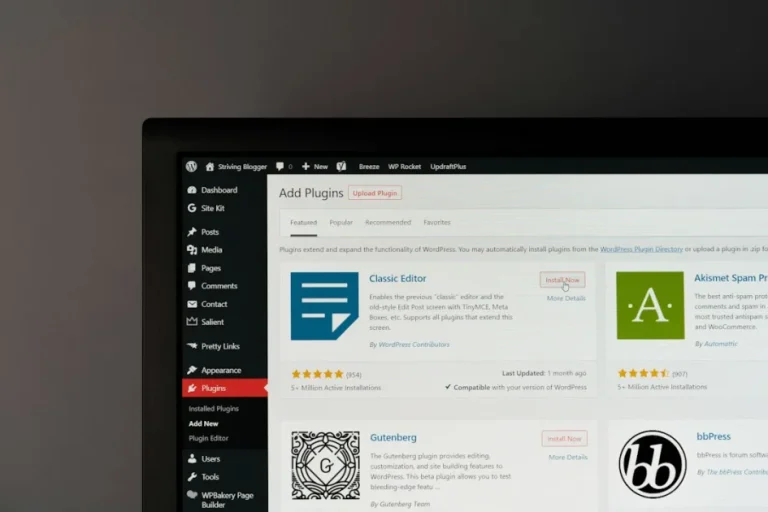
The solution isn’t to abandon automation — it’s to choose systems that analyze the site before generating. If the plugin or tool you’re using doesn’t read your published content before proposing new topics, cannibalization risk is baked into the process. If you want to understand what sets a system with prior analysis apart from one without it, Klusto’s plans show exactly how this approach is implemented inside WordPress.
Avoiding SEO keyword cannibalization isn’t a one-time fix: it’s a continuous editorial discipline built on clear inventories, pre-publication review processes, and content structures that define intent boundaries from the start. The earlier it’s integrated into your workflow, the less technical debt accumulates on the site.
Team’s Take
What strikes me most about SEO keyword cannibalization is that it’s almost never the result of a single bad decision — it’s the product of many good decisions made without enough context. Publishing on a topic related to a previous one feels logical in the moment. The problem appears when nobody keeps a record of which intent is already covered. I’ve seen sites with genuinely strong content lose rankings for months simply because two posts were answering the same question under different titles. The technical fix is straightforward; the real challenge is making semantic review a standard part of the workflow, not an emergency task.

Written by
Klusto Team
Klusto is the WordPress plugin that automates your SEO blog with AI: plans BOFU/MOFU/TOFU clusters, prevents 3-layer cannibalization, and publishes optimized articles without leaving wp-admin. No external SaaS. No migration.